Our History

Over two centuries of Freemasonry in Middlesex — from Hampton Court to Twickenham

The Founding — 2nd June 1785

Lodge of Harmony No. 255 was founded by Thomas Dunckerley on the 2nd June 1785 at The Toy Inn, a hostelry immediately adjoining Hampton Court Palace in what is now the London Borough of Richmond upon Thames.

The lodge was founded 68 years after the establishment of the Premier Grand Lodge of England in 1717. To place this in historical context, when the lodge was consecrated: the American War of Independence had only recently concluded; the storming of the Bastille was still four years away; and the Battle of Waterloo was thirty years in the future.

The lodge has operated continuously since that date and is today the oldest lodge in the Province of Middlesex. Lodge numbers are not an indication of a lodge’s age; numbers have been swapped, sold, bought, and transferred over the years.

The Toy Inn

The Toy Inn was built circa 1650 for Oliver Cromwell's troops, rebuilt circa 1700, and demolished circa 1840. It stood adjacent to the main gates of Hampton Court Palace. Before Thomas Dunckerley chose it as the setting for his new lodge, the inn had already accumulated considerable history: the poet Alexander Pope is said to have written The Rape of the Lock there, and William, Duke of Clarence — later King William IV — formed and presided over his "Toy Club" at the same venue.

The lodge met at The Toy Inn for 37 years before moving on. The inn itself was demolished circa 1840, but its memory — and the lodge's founding there — is preserved by a bronze plaque erected in July 1933 by Lodge of Harmony No. 255 on the wall to the right-hand side of the main gate of Hampton Court Palace. The plaque remains in place today.

"Built for Oliver Cromwell's troops c. 1650, rebuilt c. 1700, demolished c. 1840, wherein Pope wrote the Rape of the Lock, the Duke of Clarence, afterwards William IV formed & presided over his Toy Club, and Thomas Dunckerley founded The Masonic Lodge of Harmony 255 in 1785."
— Plaque inscription, Hampton Court Palace main gate (erected July 1933)
Thomas Dunckerley (1724–1795)

The founder of Lodge of Harmony No. 255 was one of the most prominent Freemasons of the 18th century.

  • Born 23 October 1724
  • Widely regarded as a natural son of King George II
  • Granted Grace and Favour apartments at Hampton Court Palace by King George III
  • Received a royal annuity from King George III
  • Initiated into Freemasonry at Portsmouth, January 1754
  • Provincial Grand Master of nine provinces
  • Provincial Grand Superintendent of 18 Royal Arch Provinces
  • Founded the first seaborne Masonic Lodge aboard HMS Vanguard in 1760
  • Introduced Mark Masonry to England (first evidence 1769)
  • Organised Templar Masonry into a national body in 1791
  • First Grand Master of the Masonic Knights Templar
  • Died 19 November 1795, aged 71

Note: the spelling "Dunkerley" also appears in some sources; the Wikipedia article on the founder uses "Dunckerley."

Lodge Name & Symbol

Name: No definitive record explains Dunckerley's choice of "Harmony." The lodge's own account suggests it most likely symbolises the fraternal harmony that should prevail within all lodges.

Symbol: The lodge's symbol is the lyre, which may suggest musical inspiration — though this is not confirmed by historical records.

Motto: Semper Idem — Always the Same.

Timeline of Key Events

1717

The Premier Grand Lodge Established

The first Grand Lodge of England is established in London — the body from which Lodge of Harmony No. 255 would later receive its warrant, 68 years later.

1760

Dunckerley Founds the First Seaborne Lodge

Thomas Dunckerley establishes the first Masonic lodge aboard a Royal Navy vessel, HMS Vanguard — 25 years before founding Lodge of Harmony.

2 June 1785

Lodge of Harmony No. 255 Founded

Thomas Dunckerley consecrates the Lodge of Harmony at The Toy Inn, adjoining Hampton Court Palace, Middlesex. The lodge is warranted as No. 255 — a register number that reflects UGLE allocation, not the age of the lodge itself.

May 1807

Chapter of Iris No. 255 Founded

The Royal Arch Chapter of Iris No. 255 is established at The Toy Inn — the oldest Royal Arch Chapter in the Province of Middlesex. (The Chapter only formally joined the Province on 29 April 1971.)

c. 1840

The Toy Inn Demolished

The founding venue of the lodge — The Toy Inn at Hampton Court — is demolished. The lodge has long since moved to other premises.

11 April 1865

Sir Arthur Sullivan Initiated

Professor Sir Arthur Sullivan — the celebrated composer, later of Gilbert & Sullivan fame — is initiated into Lodge of Harmony No. 255. The lodge is at this time meeting at the Greyhound Inn, Richmond, Middlesex. Sullivan is passed on 3 October 1865, and raised to Master Mason on 30 January 1866. It is through his Masonic connections at this lodge that Sullivan is later introduced to the librettist W.S. Gilbert. Sullivan subsequently becomes Past Grand Organist of the United Grand Lodge of England.

July 1933

Commemorative Plaque Erected at Hampton Court

Lodge of Harmony No. 255 erects a bronze plaque on the wall to the right of the main gate of Hampton Court Palace, recording the founding of the lodge at The Toy Inn. The plaque remains in place.

29 April 1971

Chapter of Iris Joins the Province

The Chapter of Iris No. 255, despite having been in existence since 1807, formally joins the Province of Middlesex.

Present day

Lodge Continues to Meet in Twickenham

The lodge meets four times a year at the Twickenham District Masonic Centre, 150 London Road, Twickenham, TW1 1HD — welcoming visitors and new members with the same spirit of fellowship as in 1785.

Sir Arthur Sullivan & the Gilbert Connection

The lodge's most historically significant member is Professor Sir Arthur Sullivan (1842–1900), composer of the music to the legendary Gilbert & Sullivan operettas — including The Mikado, The Pirates of Penzance, and H.M.S. Pinafore.

Sullivan was initiated into Lodge of Harmony No. 255 on 11 April 1865, at the time meeting at the Greyhound Inn, Richmond, Middlesex. He was introduced to Freemasonry by a fellow member, the composer Frederick Emes Clay.

Sullivan was passed to the Second Degree on 3 October 1865 and raised to Master Mason on 30 January 1866.

The lodge's own records, supported by research published in The Square Magazine (September 2021), confirm that Sullivan was introduced to the librettist W.S. Gilbert through a member of Lodge of Harmony No. 255. Their shared Masonic connections subsequently made it easier for the impresario Richard D'Oyly Carte to bring the two men together for their first major collaboration, Trial by Jury (1875).

Sullivan later became a member of Studholme Lodge No. 1591, London (1896) and achieved the rank of Past Grand Organist of the United Grand Lodge of England. Gilbert joined Bayard Lodge No. 1615 in June 1876.
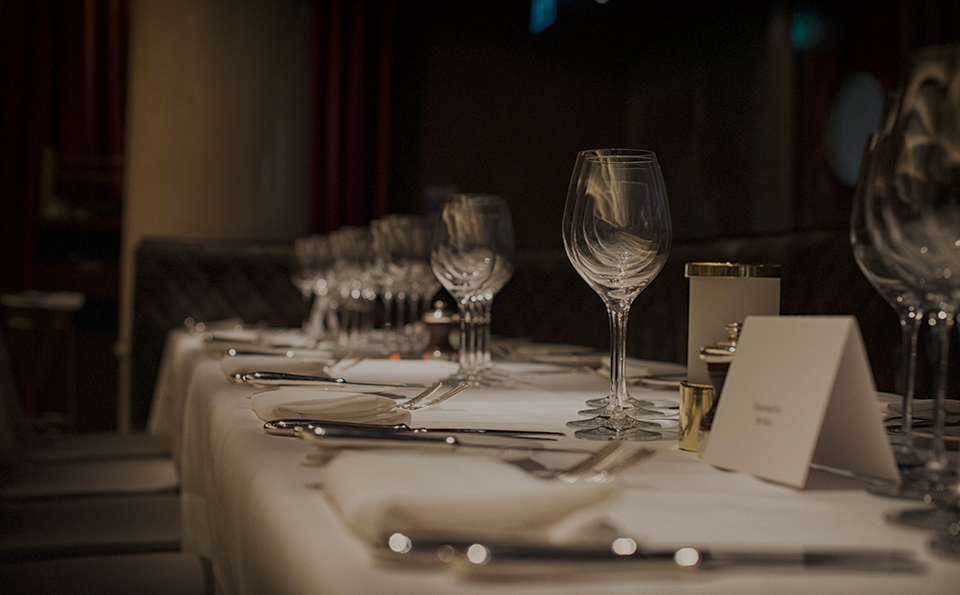
A formal Masonic dinner table — the festive board

Sullivan's Masonic Record at Lodge No. 255

Initiated 11 April 1865
Passed (2nd Degree) 3 October 1865
Raised (Master Mason) 30 January 1866
Venue at time Greyhound Inn, Richmond, Middlesex
Introduced by Frederick Emes Clay (composer)
Later rank (UGLE) Past Grand Organist

Sources: Lodge of Harmony No. 255 website; The Square Magazine, September 2021; Gilbert & Sullivan — Provincial Grand Lodge of Middlesex.

Lodge Legacy & Masonic Family

Several lodges in the Province trace their Masonic lineage directly to Lodge of Harmony No. 255:

Richmond Lodge No. 2032

Established March 1884. Traces its lineage to Lodge of Harmony No. 255.

Richmond Hill Lodge No. 6698

Consecrated 20 September 1948. Described at its 75th anniversary as tracing its lineage "back to 1785 and the Lodge of Harmony No 255."

New Broomfield Lodge

Describes itself as the "Great, Great, Great, Granddaughter" of Lodge of Harmony No. 255, consecrated in 1785.